
Lab Division
Phytomedicine Laboratory
Exploring Plant-Derived Bioactive Compounds for Cancer Biology and Translational Research
Experimental research and analytical approaches are subject to confirmed capabilities, appropriate approvals, and scientific validation.
Analytical approaches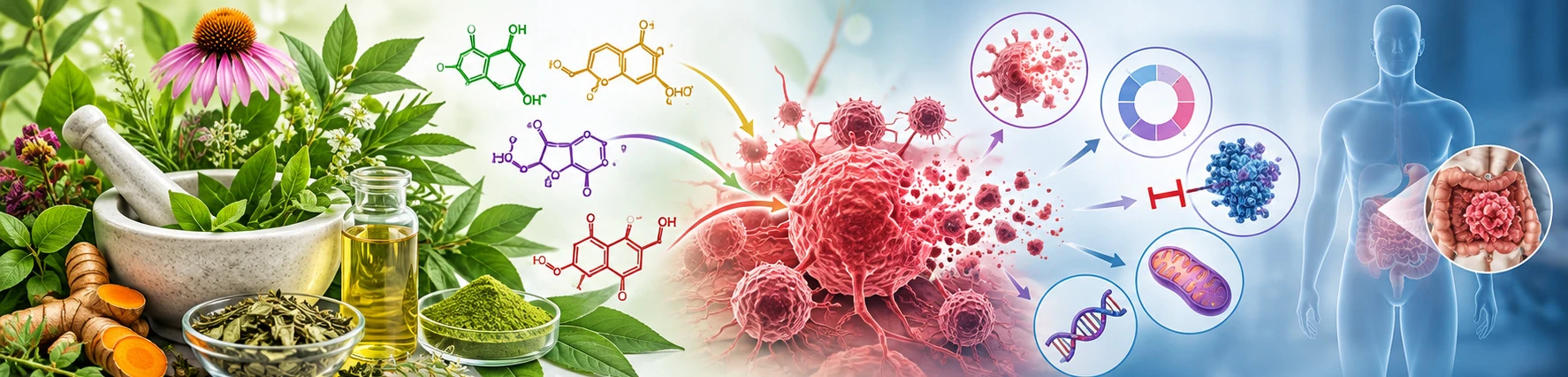
Overview
The Phytomedicine Laboratory at Zamzam Cancer Research Institute is proposed as an interdisciplinary research environment focused on the scientific investigation of medicinal plants, natural products, and plant-derived bioactive compounds, with particular emphasis on their relevance to cancer biology and experimental therapeutic discovery.
Its research framework brings together pharmacognosy, phytochemistry, analytical characterization, cellular and molecular biology, experimental pharmacology, toxicological evaluation, and computational approaches. By connecting traditionally studied botanical resources with modern evidence-based laboratory methods, the laboratory aims to investigate biological activity, mechanisms of action, reproducibility, and the translational potential of selected phytochemicals.
Research findings from early-stage experimental models are not, on their own, evidence of clinical effectiveness. The laboratory prioritizes rigorous validation, appropriate controls, transparent interpretation, and responsible reporting.
1. Research Focus Areas
1.1 Medicinal Plants, Natural Products, and Cancer Research
- Scientific evaluation of medicinal plants and their extracts in cancer-relevant experimental systems.
- Investigation of isolated phytochemicals and defined natural-product fractions.
- Screening for effects on cellular proliferation, survival, apoptosis, invasion, and stress responses.
- Comparative assessment of botanical preparations and chemically defined reference compounds.
- Prioritization of reproducible leads for mechanistic investigation rather than unsupported therapeutic claims.
1.2 Phytochemical Diversity and Bioactive Compound Discovery
- Characterization of alkaloids, flavonoids, phenolic compounds, terpenoids, saponins, glycosides, and other relevant metabolite classes.
- Bioactivity-guided fraction prioritization, where suitable separation and testing capabilities are confirmed.
- Structure–activity relationship exploration using authenticated materials and well-characterized compounds.
- Investigation of synergistic, additive, or antagonistic interactions using appropriately designed experiments.
1.3 Molecular Mechanisms and Cancer Cell Responses
- Regulation of proliferation, cell cycle, and programmed cell-death pathways.
- Oxidative stress, redox signaling, and mitochondrial responses.
- Cancer-associated signaling pathways, such as PI3K/AKT/mTOR, MAPK, NF-κB, and other pathways selected by experimental evidence.
- Effects on tumor cell migration, invasion, inflammatory mediators, and cellular plasticity.
- Mechanisms of resistance and experimental sensitization to established anticancer agents, where scientifically justified.
1.4 Inflammation, Oxidative Stress, and Chemoprevention Research
- Experimental evaluation of anti-inflammatory and antioxidant responses.
- Cellular pathways associated with chronic inflammation and malignant transformation.
- Biomarker-oriented investigation of oxidative damage and endogenous antioxidant defenses.
- Preclinical evaluation of candidate chemopreventive mechanisms without implying demonstrated human benefit.
1.5 Translational and Integrative Natural-Product Research
- Identification of reproducible bioactive botanical leads for further study.
- Integration of chemical fingerprints, experimental phenotypes, and molecular data.
- Research on limitations relevant to translation, including bioavailability, metabolism, batch consistency, and safety.
- Development of hypotheses for subsequent pharmacological and clinical investigation, subject to separate approvals.
2. Botanical Material Authentication and Responsible Sourcing
Reliable phytomedicine research begins with trustworthy plant identification, traceable sourcing, and documented specimen handling.
- Taxonomic identification using accepted botanical nomenclature and qualified expertise.
- Voucher specimen collection or reference to authenticated herbarium material, where applicable.
- Documentation of plant part, source, collection date, handling, and storage conditions.
- Assessment of geographical, seasonal, and botanical variability.
- Traceability of commercial extracts and reference standards.
- Responsible sourcing, applicable permits, biodiversity protection, and access-and-benefit-sharing requirements where relevant.
- Screening plans for contamination or adulteration when botanical materials are intended for biological evaluation.
3. Plant Extraction, Fractionation, and Sample Preparation
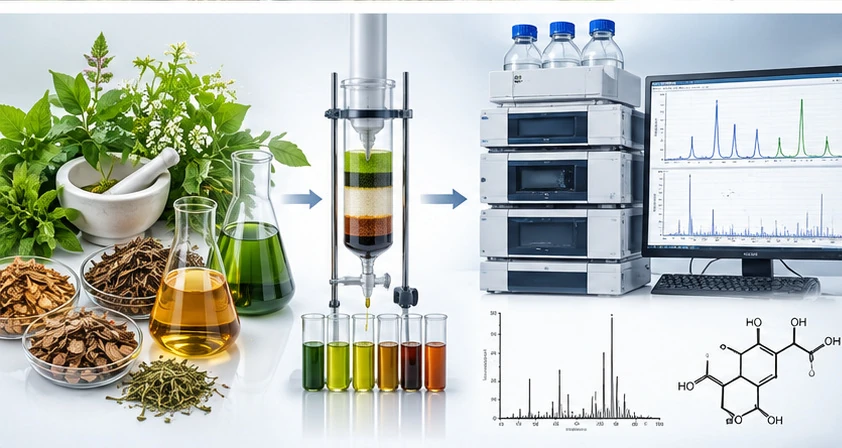
Experimental preparation methods should be selected based on the botanical material, intended chemical class, and downstream analytical or biological assay.
- Preparation of dried, powdered, or otherwise appropriately processed botanical material.
- Aqueous and solvent-based extraction approaches.
- Maceration, infusion, decoction, and assisted extraction approaches, where applicable and validated.
- Concentration and storage of crude extracts with documented recovery and handling.
- Liquid–liquid partitioning and preliminary fractionation.
- Chromatographic fraction collection and bioactivity-guided evaluation, where available.
- Recording of extract yields, batch identifiers, sample concentration, and storage conditions.
- Appropriate controls for residual solvents, vehicle effects, and interference with biological assays.
4. Phytochemical Screening and Analytical Characterization
4.1 Preliminary Phytochemical Profiling
- Qualitative screening for broad metabolite classes using appropriately validated assays.
- Total phenolic and total flavonoid content assays, with recognized interpretive limitations.
- UV–visible spectrophotometric measurements.
- Thin-layer chromatography (TLC) and comparative chemical fingerprinting.
- Reference-standard-based assays where standards are available.
4.2 Advanced Chromatographic and Spectrometric Approaches
- High-performance liquid chromatography (HPLC) and UHPLC-based profiling.
- Liquid chromatography–mass spectrometry (LC–MS/MS) for targeted or untargeted characterization.
- Gas chromatography–mass spectrometry (GC–MS) for suitable analytes.
- High-resolution mass spectrometry and nuclear magnetic resonance (NMR) for advanced structural analysis.
- Quantitation of selected marker compounds using validated analytical methods.
- Comparative fingerprints and multivariate chemometric analysis.
Their inclusion in this draft does not establish local equipment availability.
5. Quality Control and Standardization of Botanical Materials
- Species and material authentication, traceability, and batch documentation.
- Chemical marker selection and fingerprint comparison across batches.
- Consistency assessment for extraction yield and selected marker concentrations.
- Evaluation of sample stability and appropriate storage conditions.
- Assessment of moisture content and relevant physicochemical properties, where applicable.
- Evaluation of microbial contamination, heavy metals, pesticide residues, and residual solvents through validated or external analytical testing when relevant.
- Reference material use, calibration, method suitability, and transparent reporting of analytical limitations.
6. Experimental Cell Culture and Anticancer Screening
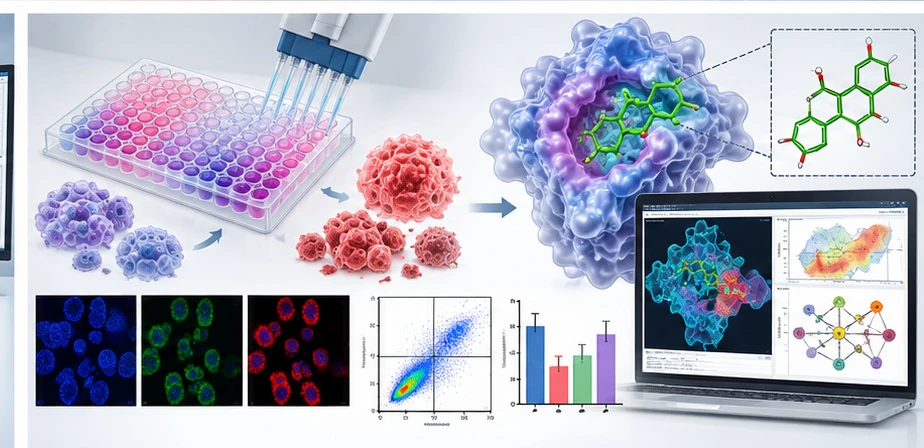
Cell-based studies can help investigate how defined botanical preparations influence cancer-associated biological processes. The use of authenticated cell lines, suitable nonmalignant comparators, and vehicle-matched controls is important for interpreting activity.
6.1 Cellular Models
- Established human cancer cell lines selected for a defined scientific question.
- Appropriate nonmalignant or reference cell models.
- Adherent and suspension culture systems, where supported.
- Exploratory 3D spheroid or co-culture models only where available or accessible through collaboration.
- Cell-line identity verification, mycoplasma surveillance, and documentation of passage history.
6.2 Viability, Proliferation, and Cytotoxicity
- MTT, resazurin, ATP-based, or alternative viability assays as appropriate.
- Direct and automated cell counting.
- Dose–response measurements and IC50 estimation where methodologically justified.
- Clonogenic or colony-formation assays.
- Time-dependent treatment-response studies.
- Orthogonal assay confirmation to address interference from colored or redox-active plant extracts.
- Assessment of comparative effects in malignant and nonmalignant models without assuming clinical selectivity.
6.3 Apoptosis, Cell Cycle, and Functional Phenotypes
- Annexin V/propidium iodide-based apoptosis assessment.
- Caspase activity and apoptosis-associated marker analysis.
- Cell-cycle distribution studies using an appropriate measurement platform.
- Mitochondrial membrane-potential and reactive oxygen species measurements.
- Wound-healing and transwell-based cell migration studies.
- Investigation of autophagy-associated or other cell-death markers where validated.
7. Molecular Biology and Mechanistic Validation
- Genomic DNA and RNA extraction and quality assessment.
- Conventional PCR, reverse transcription PCR, and quantitative real-time PCR (RT-qPCR).
- Expression analysis of selected cancer-related genes and noncoding RNAs.
- Protein extraction, SDS-PAGE, and Western blotting.
- ELISA and related measurements of selected cytokines or molecular mediators.
- Immunocytochemistry and immunofluorescence staining.
- Gene knockdown, overexpression, and other functional perturbation approaches where expertise and authorization are available.
- Linking phytochemical exposure to experimentally supported signaling and gene-expression changes.
Mechanistic conclusions should require appropriate specificity, dose relevance, controls, and independent validation rather than relying on a single assay or pathway-marker change.
8. Antioxidant, Redox, and Inflammation-Related Assays
- Chemical antioxidant-capacity assays, including DPPH, ABTS, FRAP, or comparable approaches when appropriate.
- Cellular reactive oxygen species and oxidative-stress marker measurements.
- Glutathione and selected antioxidant enzyme assays.
- Mitochondrial stress-response assessment.
- Inflammation-related cytokine or gene-expression analysis.
- Evaluation of whether cell-free antioxidant results translate into meaningful effects in cellular systems.
Chemical radical-scavenging activity does not by itself demonstrate anticancer efficacy, clinical antioxidant benefits, or safety in humans.
9. Drug Interaction and Combination Research
- Exploratory assessment of plant-derived compounds alongside selected anticancer agents.
- Analysis of additive, synergistic, or antagonistic experimental responses using prespecified quantitative approaches.
- Investigation of toxicity, cellular stress, and resistance-associated pathways.
- Consideration of potential pharmacokinetic interactions and limitations of in vitro models.
- Independent replication before proposing translational significance.
No botanical preparation should be described as a replacement for evidence-based cancer treatment based on preliminary laboratory data.
10. Computational Phytochemistry and Bioinformatics
- Literature-guided selection and curation of natural-product candidates.
- Chemical structure and physicochemical property analysis.
- In silico ADME and toxicity prediction as hypothesis-generating tools.
- Molecular docking and molecular dynamics simulations where scientifically appropriate.
- Network pharmacology and pathway enrichment analyses with careful consideration of prediction uncertainty.
- Analysis of transcriptomic or publicly available cancer datasets.
- Integration of chemical and biological data to prioritize candidates for direct experimental testing.
Computational predictions are not direct proof of target engagement, biological efficacy, pharmacokinetics, or clinical value.
Our Research Team
Miss Mir Muskaan
Supervisor
PhD
Mr Faizan
Research Assistant
BSc
Miss Toiba
Research Assistant
BSc