
Lab Division
Cancer Biology Laboratory
Advancing Cancer Research from Molecular Mechanisms to Translational Discoveries
Research areas and methods are presented as proposed activities, subject to confirmed infrastructure, appropriate approvals, and established procedures.
View outsourced approaches
Overview
The Cancer Biology Laboratory at Zamzam Cancer Research Institute is envisioned as a multidisciplinary research facility dedicated to understanding the molecular, cellular, genetic, epigenetic, and metabolic mechanisms underlying cancer initiation, progression, metastasis, and therapeutic resistance.
The laboratory's research framework integrates experimental cancer biology, molecular oncology, advanced cellular models, functional genomics, bioinformatics, and translational approaches to investigate the complex biological processes that drive malignancy.
Our scientific focus encompasses fundamental cancer mechanisms, tumor heterogeneity, tumor–microenvironment interactions, oncogenic signaling, cancer metabolism, cellular stress responses, and the identification of potential diagnostic, prognostic, and therapeutic targets.
By connecting laboratory-based investigations with computational analysis and translational research, the Cancer Biology Laboratory aims to contribute to a deeper understanding of cancer and support the development of more precise and effective strategies for cancer prevention, diagnosis, and treatment.
Research Focus Areas
Molecular Mechanisms of Cancer
- Oncogene activation and tumor-suppressor gene dysfunction.
- Cell-cycle regulation and checkpoint abnormalities.
- DNA damage responses and genomic instability.
- Alterations in apoptosis and other regulated cell-death pathways.
- Oncogenic signaling networks, including PI3K/AKT/mTOR, RAS/RAF/MEK/ERK, JAK/STAT, Wnt/β-catenin, Notch, and NF-κB.
- Molecular mechanisms associated with tumor invasion, metastatic progression, and therapeutic resistance.
Cancer Genetics and Functional Genomics
- Investigation of genetic alterations that influence cancer susceptibility, tumor development, disease progression, and treatment response.
- Mutation profiling, gene-expression analysis, copy-number alterations, functional gene studies, and characterization of cancer-associated genetic pathways.
Cancer Epigenetics
- DNA methylation, histone modifications, chromatin remodeling, transcriptional regulation, and epigenetic contributions to tumor plasticity and drug resistance.
Tumor Microenvironment and Cancer Immunology
- Cancer-associated fibroblasts, tumor-associated macrophages, immune-cell infiltration, inflammatory signaling, immune evasion, extracellular matrix remodeling, angiogenesis, and cell-to-cell communication.
Cancer Metabolism and Redox Biology
- Glycolysis, mitochondrial metabolism, lipid metabolism, amino acid utilization, reactive oxygen species, antioxidant defense systems, hypoxia-related signaling, metabolic adaptation, and relationships with therapeutic resistance.
Metastasis and Epithelial–Mesenchymal Plasticity
- Local invasion, epithelial–mesenchymal transition, cellular migration, extracellular matrix interactions, and metastatic colonization.
Cancer Stem Cells and Tumor Heterogeneity
- Stem-like cancer cell populations, cellular plasticity, clonal diversity, differentiation states, tumor recurrence, and therapy-resistant subpopulations.
Cancer Therapeutics and Drug Resistance
- Responses to anticancer agents and mechanisms of intrinsic and acquired resistance.
- Targeted therapies, conventional anticancer drugs, drug combinations, apoptotic responses, resistance-associated signaling pathways, and experimental therapeutic sensitization.
Cell Culture
Cell-based experimental systems provide an important foundation for investigating cancer biology under controlled laboratory conditions.
Mammalian Cell Culture
- Maintenance and propagation of established cancer cell lines.
- Culture of nonmalignant reference cell lines.
- Adherent and suspension cell-culture systems.
- Cell growth, viability, morphology, and proliferation studies.
- Experimental drug treatment and dose-response investigations.
- Cellular stress and treatment-response experiments.
- Cell authentication and mycoplasma surveillance as part of culture quality control.
Molecular Biology and Gene Expression Analysis
Sequencing-based characterization listed in this section is covered by the proposed outsourced approaches.
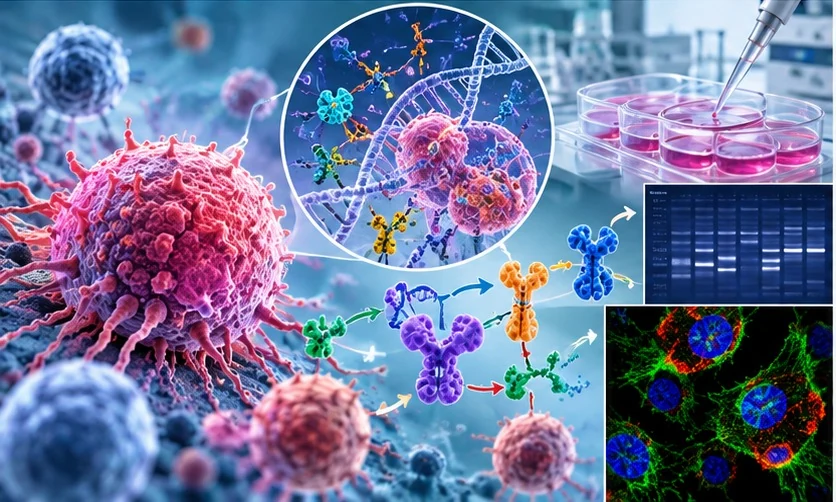
The laboratory's proposed molecular biology capabilities encompass nucleic-acid isolation, amplification, expression profiling, and molecular characterization.
Core Molecular Techniques
- Genomic DNA extraction and purification.
- Total RNA and microRNA isolation.
- Nucleic-acid quality and quantity assessment.
- Conventional polymerase chain reaction (PCR).
- Reverse transcription PCR (RT-PCR).
- Quantitative real-time PCR (qPCR).
- Reverse transcription quantitative PCR (RT-qPCR).
- Agarose gel electrophoresis.
- DNA and RNA integrity assessment.
- Gene-expression profiling.
- Mutation-specific amplification and genotyping assays.
- Primer design and assay optimization.
Advanced Molecular Applications
- microRNA and long noncoding RNA expression studies.
- Gene-expression signatures associated with cancer phenotypes.
- Allele-specific molecular assays.
- Molecular analysis of signaling pathways.
- Targeted gene panels and sequencing-based characterization.
- Circulating nucleic-acid analysis, where appropriate sample-processing systems are available.
Protein Expression and Molecular Signaling
Protein-level investigations are essential for determining how molecular changes influence cancer-cell behavior.
Protein Analysis Techniques
- Protein extraction and quantification.
- SDS-polyacrylamide gel electrophoresis (SDS-PAGE).
- Western blotting.
- Immunoprecipitation and co-immunoprecipitation.
- Enzyme-linked immunosorbent assays (ELISA).
- Immunocytochemistry.
- Immunofluorescence staining.
- Protein localization studies.
- Assessment of protein phosphorylation and signaling activation.
- Analysis of apoptotic, proliferative, and stress-response markers.
These approaches support the characterization of protein abundance, pathway activity, molecular interactions, and treatment-associated biological responses.
Cellular and Functional Cancer Assays
A broad range of functional assays can be used to examine the biological behavior of cancer cells and their responses to experimental interventions.
Cell Proliferation and Viability
- MTT and related metabolic viability assays.
- Resazurin-based cell viability assays.
- ATP-based viability measurements.
- Direct and automated cell counting.
- Colony-formation and clonogenic survival assays.
- Growth-curve analysis.
- Drug-response and dose–response evaluation.
Apoptosis and Cell Death
- Annexin V-based apoptosis assays.
- Propidium iodide staining.
- Caspase activity assays.
- DNA fragmentation analysis.
- Mitochondrial membrane-potential measurements.
- Assessment of apoptosis-associated proteins.
- Investigation of ferroptosis, necroptosis, and other regulated cell-death mechanisms where suitable assays are established.
Genomics, Transcriptomics, and Epigenomic Analysis
The following approaches are part of the proposed research framework. Their listing does not imply that sequencing or epigenomic instruments are installed or directly operated in this laboratory.
Advanced molecular profiling approaches provide opportunities to investigate cancer-associated alterations at multiple biological levels.
Genomic and Transcriptomic Approaches
- DNA sequencing-based mutation analysis.
- Targeted next-generation sequencing.
- Whole-exome sequencing analysis.
- Whole-genome sequencing analysis.
- Bulk RNA sequencing.
- Differential gene-expression analysis.
- Noncoding RNA profiling.
- Single-cell RNA sequencing analysis.
- Investigation of gene fusions and genomic alterations.
- Comparative molecular profiling of experimental groups.
Epigenetic Investigations
- DNA methylation analysis.
- Histone-modification profiling.
- Chromatin accessibility analysis.
- Chromatin immunoprecipitation-based approaches.
- Integrated analysis of epigenetic and transcriptional datasets.
Sequencing generation and specialized instrument access for the genomic, transcriptomic, and epigenetic approaches listed here are planned through outsourcing. Associated computational analysis and external scientific collaborations remain subject to confirmed infrastructure and agreements.
Translational Oncology and Biomarker Research
Translational cancer research connects experimentally generated molecular findings with clinically relevant biological questions.
Areas of Interest
- Identification of candidate diagnostic biomarkers.
- Investigation of prognostic molecular signatures.
- Molecular correlates of treatment response.
- Experimental validation of therapeutic targets.
- Drug sensitivity and resistance profiling.
- Circulating tumor DNA and other liquid-biopsy research approaches.
- Tissue-based molecular profiling.
- Comparative analysis of cancer and reference samples.
- Integration of molecular measurements with appropriately governed clinical datasets.
Research involving human biospecimens or patient information must comply with applicable ethical approvals, informed-consent requirements, sample-governance procedures, and data-protection standards.
Bioinformatics and Computational Cancer Biology
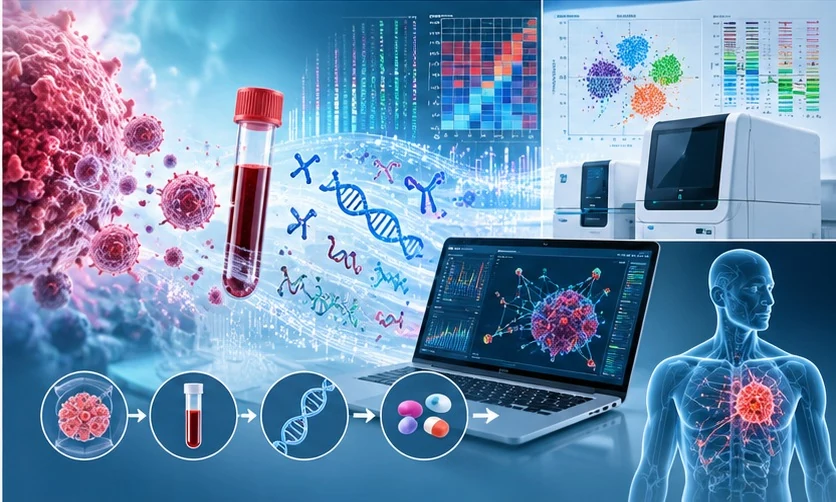
Computational approaches are integrated into the proposed research framework to support the interpretation of complex cancer-associated biological datasets.
Computational Applications
- Cancer genomics data analysis.
- RNA-sequencing data processing and interpretation.
- Differential gene-expression analysis.
- Functional enrichment analysis.
- Gene ontology and pathway analysis.
- Protein–protein interaction networks.
- Gene regulatory network analysis.
- Public cancer dataset exploration.
- Single-cell transcriptomic data analysis.
- Survival and clinical association analysis.
- Biomarker candidate prioritization.
- Multi-omics data integration.
Research Quality, Biosafety, and Scientific Integrity
The Cancer Biology Laboratory's proposed research framework emphasizes responsible experimental practice, reproducibility, and transparent reporting.
Key Principles
- Standardized experimental procedures.
- Appropriate positive and negative controls.
- Biological and technical replication.
- Cell-line authentication.
- Mycoplasma testing.
- Instrument calibration and maintenance.
- Accurate laboratory recordkeeping.
- Data quality assessment.
- Appropriate statistical design and analysis.
- Research ethics and biosafety compliance.
- Responsible management of biological samples.
- Transparent reporting of experimental methods and limitations.
Scientific Collaboration and Research Development
The Cancer Biology Laboratory aims to support collaborative research connecting molecular biology, cancer genetics, computational biology, biomedical technology, and translational oncology. Potential collaborative activities include multidisciplinary research projects, methodological development, experimental validation of scientific hypotheses, research training, and the exchange of scientific expertise. The broader objective is to promote rigorous, innovative, and reproducible research that contributes to the understanding of cancer biology and its implications for human health.
Our Research Team
Professor Rashid Mir
Supervisor
PhD Medical Biochemistry
Mr Sufiyan Khan
Senior Associate
PhD Scholar
Miss Tanzeela Bhat
Junior Research Fellow
MSc Clinical Biochemistry
Miss Anessa
Junior Research Fellow
MSc Biotechnology
Miss Mehak
Junior Research Fellow
MSc Biotechnology
Miss Mufreena
Research Assistant
BSc
Miss Suriya
Research Assistant
BSc
Miss Suzain
Research Assistant
BSc
Miss Bushra
Research Assistant
BSc
Miss Rumaisa
Research Assistant
BSc
Our Research Vision
To advance the understanding of cancer through integrated molecular, cellular, and computational research, while supporting scientifically rigorous discoveries with potential relevance to cancer diagnosis, therapeutic development, and improved patient outcomes.